
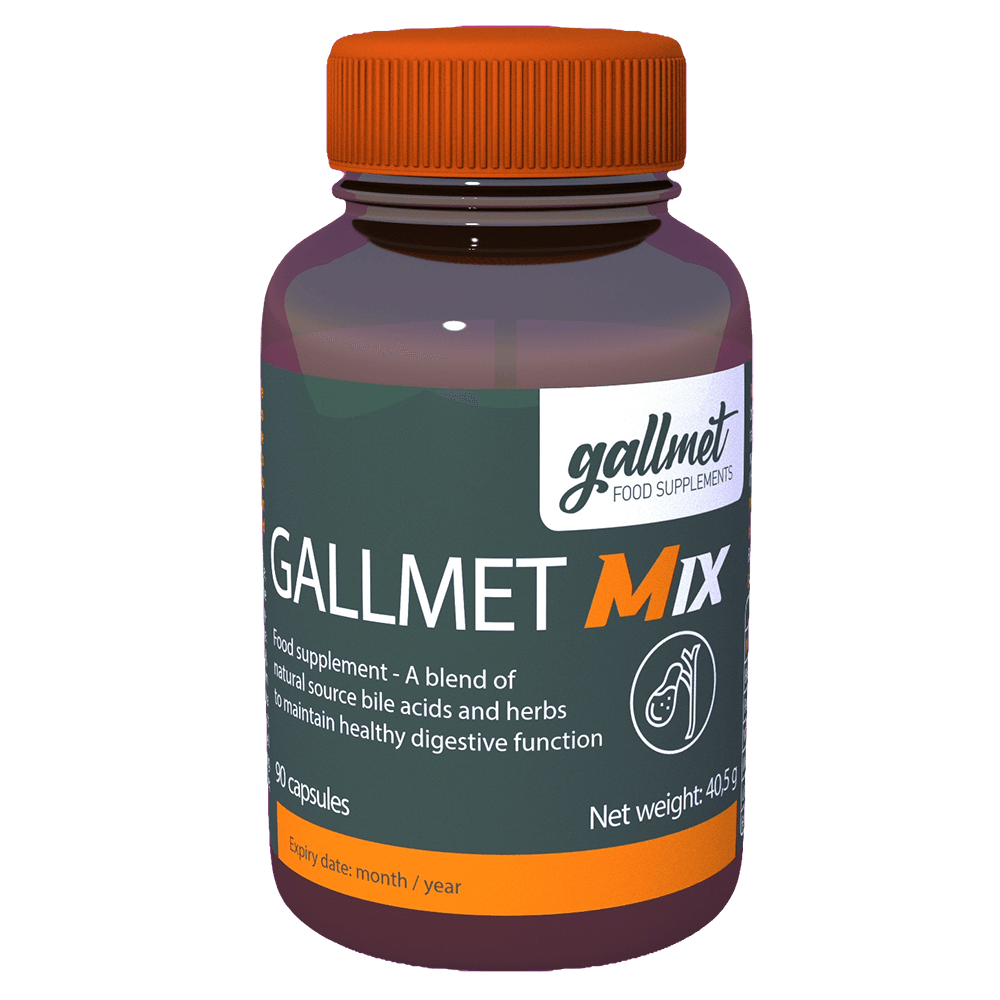
GALLMET-Natural and Mix product information brochures, leaflet and laboratory test

Laboratory test results of GALLMET bile acid capsules

GALLMET products have been tested by the international WESSLING laboratory for:
- Microbiology
- pollutants,
- heavy metals,
- radioactivity,
- doping-free,
- does not contain potency enhancing substances,
- allergen-free (gluten, lactose, casein)
Laboratory test results (.pdf):
The importance and physiological effects of natural bile acids in the scientific literature1
(the full text of the quotations and excerpts below can be found in the literature cited here)
The purpose of this leaflet is to provide consumers with adequate and complete information and to help them make an informed and informed choice by outlining the literature on the physiological effects of bile acids.
This information has been prepared in full compliance with the general provisions of Directive 2011/83/EU of the European Parliament and of the Council on consumer protection, the provisions of Directive 2002/46/EC of the European Parliament and of the Council on the labelling of foodstuffs and Directive 2005/29/EC of the European Parliament and of the Council prohibiting unfair business-to-consumer commercial practices, bearing in mind the aim of the legislation to provide consumers with the fullest and most detailed information possible about the product they are buying and its ingredients.
The information on the ingredients of the product is of an informative nature and does not refer to the effects of the product. If you have any health problems, consult your doctor.

1. THE ROLE OF BILE ACIDS IN DIGESTION AND THEIR DEFICIENCY AFTER GALLBLADDER SURGERY
The liver, the bile ducts and gallbladder, the duodenum, and the pancreas together form a structurally and functionally interconnected part of the digestive system. These organs interact closely with each other, and their coordinated cooperation is essential for perfect digestion.
In the mouth, food is chewed into small pieces with the help of the teeth. The mere sight and smell of food, and especially its taste, trigger the secretion of saliva, gastric and digestive juices, as well as minor bile production.
The movements of the stomach mix the food, and then the stomach begins to forcefully propel it in small portions into the duodenum.
Due to the mechanical or chemical effect of food and drink entering the duodenum, an increasing amount of cholecystokinin, which controls the emptying of the gallbladder (a gastrointestinal hormone, or simply intestinal hormone), is released, and this: firstly, opens the common sphincter of the shared duct system formed by the bile and pancreatic ducts; secondly, contracts the gallbladder, causing bile and pancreatic juice to flow into the duodenum, where it mixes with the chyme that has arrived there; and thirdly, it stimulates the pancreas to increased activity, resulting in a significant increase in the production of digestive enzymes.
The intestinal hormone (cholecystokinin) is produced in the mucous membrane of the duodenum, and its release is triggered by the food and drink entering it (primarily fats and oils), which results in bile secretion. If bile production, bile secretion, or the circulation of bile is inadequate, the breakdown of fats and digestion will also be inadequate (a state of bile deficiency occurs, affecting at least 25% of people). This can be accompanied by constipation, bloating, general malaise, or possibly diarrhoea. This condition can be positively influenced by taking bile acids with your meals.
After gallbladder surgery (postcholecystectomy), the storage function of the gallbladder is lost. Bile continuously trickles into the duodenum, so in the event of an increased need for bile (higher fat meals), there is no reserve bile due to the absence of the gallbladder. Thus, fats are not completely digested, and upon reaching the large intestine, the intestinal flora breaks down the undigested parts with gas formation, causing abdominal bloating and possibly diarrhoea. Due to the absence of the gallbladder, the occasional bile-deficient state associated with meals can be favourably managed by the administration of bile acids.

2. PSORIASIS.
Role of bile acids and endotoxins in the pathogenesis and treatment of psoriasis (endotoxin = internal poison)2
"Based on clinical symptoms (indigestion, gallbladder abnormalities, etc.), the authors assume that the lack of bile acids may be important in the pathogenesis of psoriasis. Bile acids act as a safeguard for (physico-chemical) protection against bacterial endotoxins produced in the gut; in their absence, the absorption (translocation) of endotoxins becomes possible, which can cause the release of cytokines. If endotoxin translocation is prevented by bile acid supplementation, the release of pro-inflammatory cytokines can be inhibited."

3. NATURAL IMMUNITY.
„The role of bile acids in the physico-chemical protection of the body3,4. According to the latest international research, bile acids regulate immunity, and immunity depends on bile acids.5”
"An important effect of bile acids, recognised by us and since confirmed by others, is the special protection of the body, which takes effect in the gut.
In their (in vitro) studies, an American research group demonstrated that treating the endotoxin macromolecule with a bile acid (sodium deoxycholate) results in lower molecular weight, no longer toxic "subunits". This raised the suspicion that bile acids may also participate in the detoxification of endotoxin in the living body (in the gut).
Bacterial endotoxin is chemically a lipopolysaccharide macromolecule, in which the toxic effect is linked to its fatty acid-rich lipid envelope. Thus, it could be assumed that the detoxification of endotoxins in the living body (in vivo), within the intestinal tract, requires the presence of an adequate amount of bile or bile acids.
We named this defence mechanism the physico-chemical protection of the body. The basis of physico-chemical protection is therefore the detergent (fat-breaking) effect of bile acids.
The question then arises as to whether the detergent effect of bile acids is directed only against bacterial endotoxins. For it is known from the observation of Max Theiler that the yellow fever virus and other "arthropod borne" viruses (currently classified as the Flaviviridae family) are inactivated when they are brought into contact with monkey bile.
It seems probable that temporary and partial bile acid deficiency may be important, for example, in the development of herpes infections after major dietary overloads (such as the fatty foods at weddings, christenings, etc.)."
"About bile acids: physico-chemical protection6.
Having understood the effects of LPS (lipopolysaccharide ~ endotoxin ~ internal poison), it became an important question how it enters the bloodstream. In connection with the investigation of this, we established in 1969 that the absorption (translocation) of endotoxins from the gut is caused by bile acid deficiency. Under natural conditions – in certain pathological cases – the endotoxin is always absorbed from the gut into the circulation, initiating pathological processes. Under normal circumstances, however, bile acids protect the body against the endotoxins always present in the gut because they split them into non-toxic parts. It also turned out that this protection provides a defence against all pathogens with a lipoid (lipoprotein) structure (for example, the so-called large viruses with a peplon envelope). We named this defence system, based on the surface-active (detergent) effect of bile acids, physico-chemical protection (Bertók, 2002). Weaker or stronger endotoxaemia developing due to bile deficiency may play a role in the development of several pathological conditions, such as septic shock, kidney failure in patients with jaundice due to bile duct obstruction, intestinal ischaemia, burn shock, radiation sickness, certain endocrine disorders, psoriasis, atherosclerosis, etc. Bile acids can play an important role in supporting the human body in the defence against certain pathological forms (e.g. kidney failure, psoriasis). It turned out that all those effects which damage the intestinal mucosa reduce or make the production of cholecystokinin completely impossible, in the absence of which the gallbladder cannot empty the bile into the gut, and in the partial absence of this, the endotoxins released from the dead cell walls of the disintegrated Gram-negative bacteria can be "absorbed" and, entering the circulation, trigger endotoxaemia, the most diverse diseases, and in more severe cases, shock.
The investigation of physico-chemical protection, which is based on the surface-active property of bile acids, using modern methods and exploring it in detail could shape a new pathological approach, since it also affects the fundamental questions of cholesterol metabolism, as bile acids are the largely recycled end products of this process. Since all steroid hormones are quantitatively only a fraction of the bile acids produced, it can rightly be assumed that the cholesterol-bile acid transformation can largely determine the production and breakdown of all steroid hormones, which are important not only for natural resistance but also for acquired immunity (Bertók, 2002).
It can therefore be concluded that in the physico-chemical protection based on the detergent effect of bile acids, we have recognised a general defence mechanism of the body that is not limited to bacterial endotoxins, but extends to all those "agents" (for example, certain viruses as well) which have a lipoprotein or lipoid (peplon) structure on their surface. Therefore, alongside the previously known defence mechanisms of the body, we can also align the physico-chemical defence system of the body, the safeguards of which are the bile acids produced in the liver and participating in the enterohepatic circulation."

4. The negative effect of stress - regarding bile production and bile emptying - can be counteracted with bile acids7
"Stress is therefore a response of the body manifested in a characteristic group of symptoms, which can be triggered by any harmful factor (physical or emotional), especially in women with a more sensitive nervous system.
Thus, it has now become clear and accepted that Selye's general adaptation syndrome in humans and higher animals is identical to a highly coordinated defensive emergency reaction, which often presents as a febrile illness and is known today as the acute-phase response (APR).
The best experimental model of the acute phase response (APR), although not identical in all respects to stress, is the symptom complex induced by a lipopolysaccharide-like endotoxin in the cell wall of a Gram-negative bacterium.
The role of CRP (C-reactive protein) in AFV is therefore also an important component in the development of so-called "immunocompetence". It cannot be ignored that stress has a significant effect on the whole digestive system, including bile production/void. Disturbance of bile production and excretion reduces or suspends one of the body's very important defence systems, the so-called detergent defence system based on the surfactant action of bile acids. In its absence, the body is defenceless against the attack ("translocation") of certain toxins (e.g. endotoxins) and so-called "big viruses" (e.g. herpes group) in the gut."
Based on recent international research and scientific literature, it also includes viruses such as: inluenza, rotavirus, hepatitis B/C/D virus family.5
5. Herpes and bile acids8
Bile acids may be effective against peplon (lipid, lipoprotein) enveloped macroviruses, according to recent international research.5
"The bile secreted by the liver enters the small intestine, but not all of it and not immediately. A lot of bile is stored in the gallbladder, located under the liver, which empties after a meal, thereby assisting continuous bile production, meaning that the most bile reaches the small intestine when it is needed most.
Those who no longer have a gallbladder because it has been surgically removed can no longer rely on this assistance, and therefore they have a relative bile acid deficiency during meals. To counteract this, they can either eat more frequently in small portions or supplement the missing bile acid with an appropriate preparation.
Relative bile acid deficiency can be one of the triggers for cold sores.
Based on recent international research and scientific literature, it also includes viruses such as: inluenza, rotavirus, hepatitis B/C/D virus family.5

6. The cholesterol question: too high or too low cholesterol?9
"A large group of compounds formed from cholesterol consists of bile acids. These are produced through the function of the liver; beyond their role in the digestion and absorption of fats, they are important tools for detoxification, as they represent the only possible physiological pathway and means for cholesterol excretion.
The role of optimal bile acid production is therefore of central importance, because low bile acid secretion can be the source of many diseases.
Their primary role is manifested in that they help the body get rid of excess and thus harmful cholesterol. If the liver produces and excretes less bile acid – which is caused by stagnant, poorly and irregularly emptying bile – which occurs because we consume few bile-stimulating foods, then less bile is formed. In such cases, more excess cholesterol remains in the body, the digestion of fats becomes less complete, and the fats absorbed in this way increase the cholesterol and triglyceride content of the blood, deposit on the walls of the blood vessels in the circulatory system, narrow their inner lumen, and thereby can create catastrophic circulatory and infarction-causing situations.
Some of the bile acids that enter the intestine are reabsorbed, allowing the absorption of fat-soluble vitamins. The bile acids, which also circulate in the blood, help to transport the vitamins to their final destination, the cells. In fact, they allow vitamins to pass through the double (fat and protein) layer of the cell wall to their destination, the cells.
Consequently, if there are not enough bile acid molecules in the gut, meaning we do not consume a sufficient amount of food with a bile-emptying effect (for example, fat, oil), then the absorption and utilisation of fat-soluble vitamins (A, D, E, K) will also be impaired. Therefore, even if we take in a sufficient amount of fat-soluble vitamins, due to their poor utilisation they will not be absorbed, and despite the apparently adequate vitamin supply, their deficiency diseases may occur.
Two thirds of the bile acids that enter the intestine are reabsorbed into the blood and then enter the liver, where they participate in the gut-blood-liver-intestinal cycle, thus fulfilling their physiological functions.
If we do not regularly empty the gallbladder, digestion will be incomplete, affecting not only fats but also carbohydrates and proteins, because less secretion containing digestive enzymes is released from the pancreas, and it also enters the duodenum irregularly. Stagnant bile can trigger stone formation, and bile secretion flowing over into the pancreas can trigger inflammation of the gland with all its unforeseeably unpleasant consequences.
Irregular bile excretion has many other harmful consequences:
- Under normal circumstances, bile acids destroy the harmful bacteria that enter the small intestine from the pharyngeal microflora during periods of reduced gastric acid production, which, without this protection, could cause bloating, flatulence, and possibly diarrhoea through their putrefactive and gas-forming effects. The small intestine is normally sterile, bacteria have no business there!
- The bile acids reaching the final section of the small intestine are the main factors in triggering the normal urge to defecate. Consequently, if little bile acid enters the small intestine, that is, if the concentrated bile is not emptied from the gallbladder regularly on a daily basis, constipation may occur. First, the daily bowel movement is missed, and from the stagnant faeces, an increasing amount of water and toxic substances is absorbed, poisoning the body (autointoxication), and the normally formed faeces becomes hard and lumpy. The bile pigment in the more concentrated bile colours the faeces dark brown. The darker or lighter colour of the faeces accurately indicates the amount of excreted bile pigment.
- Bile acids can also destroy viruses with an external lipid and protein envelope (peplon) present in the large intestine. They destroy, inactivate, and break down the endotoxins of the bacterial flora living there. Endotoxins (internal poisons), due to their large molecules, have an allergenic effect, can cause cardiac arrhythmias, are pyrogenic, can cause general poisoning (sepsis) after surgery, and may contribute to male infertility.
Bile acids therefore play an important role in defending against harmful effects on the physical and physiological state of the body."
7. THE ROLE OF FAT PROCESSING IN DISEASE.
"The circulation disorder of bile acids is more or less involved in every disease10
During eight years of research work, Dr. Péter Légrády and the medical group he established arrived at a new approach and results. They investigated the circulation and metabolism of the significant bile and bile acids in the traffic of fat, fat-like, and fat-soluble substances, and the disruption of this process, or more simply: the functional disorders of the liver and biliary system. Thus, they examined not only liver and biliary diseases (e.g. gallstones), but also diseases presumably originating from the functional disorder of this system, or in which it plays a more or less significant role, such as rheumatic diseases, migraine, and functional infertility. The headache of biliary origin is a well-known phenomenon: migraine biliare.
Allergic diseases have also been studied and researched, and the role of the hepatic biliary system in some or many long-standing chronic diseases, both in their development and in their curability. This novel, different approach.
The metabolism of bile acids can have defects in five, six, or seven places. The treatment to be applied depends on which place it is.
Two thousand patients were examined, which, including the control group, amounted to five thousand records. From the material of their eight-year work, it could be concluded that the metabolism of fat-like and fat-soluble substances is more or less involved in every disease. And a key part of this is the circulation of bile acids. If the normal ratio can be restored, then the condition of the patients improves."
8. CANDIDA Albicans (candidiasis).
"Candidiasis: real danger or big business? 11
Candida albicans is a budding, pseudohyphae-forming type of yeast, which can also be found on the mucous membranes, skin, and in the intestinal tract of healthy people. Candida yeasts participate in the utilisation of decomposition products formed in the body in the same way as other microbe species living in the gut…
The starting point of candidiasis is usually when intestinal immunity decreases due to certain environmental effects (e.g. antibiotics, poor diet, irregularity, stress), thus the proliferation of Candida fungi can begin… Candida albicans attacks from multiple sides and in a way that comprehensively affects our organs. If the proliferation of Candida fungal species has begun in the intestinal tract, in the cavities of the reproductive and urinary systems, as well as on the skin surface and in the mouth, then the breakthrough of the mucous membrane of the intestinal wall follows. In this case, the fungi can be absorbed and enter the circulatory system, causing the so-called systemic (whole-body) candidiasis… All these conditions are met in many cases in "modern" people leading a general lifestyle, thus fungal diseases could become endemic… the general state of health has weakened more than ever before… The prolonged use of broad-spectrum antibiotics, or certain types of antibiotics (penicillin, tetracycline, erythromycin), can cause damage to the sensitive microbial balance of the intestinal flora. Antibiotics can also be present in animal products (milk, dairy products, meat)…
A diet low in cellulose and pectin (dietary fibre), coupled with a preponderance of protein and fat, fundamentally increases the risk of candidiasis… The effect of stress in weakening intestinal and central immunity is now widely known, which is why achieving mental peace and balance is extremely important for the improvement of the patient's condition… A connection can be discovered at several points between candidiasis and allergic diseases. The defence system weakened by allergy becomes extremely vulnerable, thus easily becoming a target for fungi… In many cases, behind allergies lies an incipient, whole-body (systemic) fungal disease, and the frequency of allergic rhinitis (hay fever), asthma, eczema, and food allergies increases dramatically among those suffering from candidiasis… The long-term struggle with fungi makes the immune system hypersensitive to invading cells, cellular substances, and metabolic products, thus resulting in chronic allergic complaints… Some of the allergic symptoms are not caused by living fungal cells, but by the chemical substances they secrete and by dead fungal cells…”
"What you need to know about candidiasis.12
Candidiasis can be a severe systemic (affecting the whole body) disease, which develops in the presence of appropriate predisposing factors or in certain clinical situations… Systemic candidiasis is a severe, life-threatening condition that develops in patients with reduced immunity, or after major abdominal surgeries, in patients cared for in intensive care units, following surgical interventions… Some of the well-known conditions affect the skin and skin appendages, while others affect the mucous membranes. More cases of surgical and systemic candidiasis are being diagnosed than before, as the number of patients with reduced immunity is increasing. The occurrence of candidiasis and other mycoses represents a serious challenge among organ and bone marrow transplant recipients, those suffering from malignant haematological diseases, those receiving aggressive chemotherapy, those treated in intensive care units, those wearing long-term intravascular cannulae, patients who have undergone major abdominal surgery, and HIV-positive individuals. Vaginal candidiasis can occur repeatedly even in women with intact immunity, even in the absence of predisposing factors…
„New” candidiasis, as a clinical condition affecting the entire body, is associated with a wide range of symptoms and complaints. Itching in various parts of the body, blurred vision, a lump-like sensation in the throat, a blocked nose, fatigue, difficulty concentrating, bloating, carbohydrate cravings, constipation, diarrhoea, menstrual cramps, etc. Some patients have, or have had, skin, nail or vaginal candidiasis, or other fungal infections… Patients suffering from this „new” form of candidiasis are truly in distress. The patients” general malaise and abdominal complaints may be caused by bowel disease, irritable bowel syndrome or even a tumour.”
"Nowadays, the importance of fungal infections has increased with the rise in the number of patients with temporary or persistent immune deficiencies.13
Granulocytes and monocytes play a crucial role in defending against fungi, thus in white blood cell deficient (neutropenic) patients who lack resistance to fungal infections, severe infections affecting the whole body can develop. According to autopsy examinations (Jehn 1988), systemic (whole-body) fungal infections are responsible for more than 50% of the deaths of cancer patients occurring during their period of white blood cell deficiency, which provides resistance against fungal infections. The whole-body fungal infections of patients with a deficiency of white blood cells that provide resistance against fungal infections are often fatal despite anti-fungal therapy… It is not indifferent what further damage the applied drugs cause in the already depressed bone marrow…”
"Aspects of the effects of bile salts on Candida albicans:14 … Bile acids, with particular regard to cholic acid, deoxycholic acid, and chenodeoxycholic acid, proved to have an inhibitory effect on proliferation and growth (fungistatic) on Candida albicans… bile salts aid the transformation of Candida albicans into a useful yeast form."
"The antifungal role of bile acids:15 Today it has been established that bile acids and their simple derivatives exhibit anti-Candida activity… In light of the previous reports, the current discovery was surprising, that bile acids have a proliferation-inhibiting effect on Candida fungal species…”
"The environmental biology of Candida albicans colonisation in the gut:16 Candida albicans was inoculated into the stomachs of antibiotic-treated and untreated Syrian hamsters to determine whether the Candida fungus is capable of opportunistically colonising the gastrointestinal tract and disseminating into the visceral organs. The intestinal microflora damaged by the antibiotic treatment predisposed the hamsters to the overgrowth of Candida albicans in the gastrointestinal tract and to its whole-body (systemic) dissemination in 86% of the animals… Our results clearly demonstrate the significance of the normal, healthy microflora of the gut in preventing the colonisation and dissemination ability of Candida albicans… Secondary bile acids can reduce the adhesion of Candida albicans to the mucous membrane, by altering the Candida adhesin molecules or mucosal receptors or both, thereby making it impossible for Candida cells to attach to the tissues of the gut."

9. HEALTH-METABOLISM-DIABETES. Is the fountain of youth to be found in bile?17,18
Science has taken another step in the search for a long life. A new study by Concordia University in Canada was the first to identify the role of a secondary bile acid, lithocholic acid (LCA), in extending lifespan.
The research was conducted using yeast; however, the discovery could have significant implications for human lifespan and health, as yeast shares several elements with humans."
"From previous studies, we know that bile acids have a beneficial effect on health and lifespan. For example, it has been proven that they accumulate in the blood serum of long-lived mice and play a role in improving the liver and pancreatic functions of rodents. In light of this, we believe that bile acids hold the potential for treating age-related diseases. They may perhaps offer hope for a healthy life in old age."
1 G.A.D. Haslewood (Emiritus Professor of Biochemistry in the University of London) : The Biological Importance of Bile Salts, 1978, North-Holland Research Monographs Frontiers of Biology - Volume 47., ISBN 0-7204-0662-5.
2 Dr Bertók Lóránd (Doctor of Medicine - Hungarian Academy of Sciences, Professor Emeritus, He is in 500 Greatest Genuises Of the 21st Century - American Biographical Institute) and Dr Gyurkovics Klára: Role of bile acids and endotoxins in the pathogenesis and treatment of psoriasis, http://www.vitalitas.hu/olvasosarok/online/oh/2000/17/5.htm
3 Dr Lóránd Bertók (Doctor of Medicine - Hungarian Academy of Sciences, Professor, He is in 500 Greatest Genuises Of the 21st Century - American Biographical Institute): The role of bile acids in the physico-chemical defence of the body, Hungarian Science, 2008/07, page 844
4 Dr Bertók Lóránd (He is in 500 Greatest Genuises Of the 21st Century - American Biographical Institute), Dr Berczi István: Natural Immune Mechanisms and of Species Specific Resistance, Advances in Neuroimmune Biology 1 (2011) 11-24, DOI 10.3233/NIB-2011-002, IOS Pres
5 Antiviral and immune supporting effects of bile acids https://www.epesavak.hu/virus-immun-szakirodalom
6 Dr Lóránd Bertók (Doctor of Medicine - Hungarian Academy of Sciences, Professor, He is in 500 Greatest Genuises Of the 21st Century - American Biographical Institute): The role of endotoxins in natural immunity, Hungarian Science, 2004/10, page 1130.
7 Dr Lóránd Bertók (Doctor of Medicine - Hungarian Academy of Sciences, Professor, He is in 500 Greatest Genuises Of the 21st Century - American Biographical Institute): New aspects in the pathophysiology of stress - In memory of Selye, Hungarian Science, 2007/05, page 607
8 Dr Tihanyi: Detoxification, http://bolthely.hu/drtihanyi/oldal/egyeniu0026amp;id=4a4a7836362b0f5_Meregtelenites
9 Dr Tibor Gere: The cholesterol question: too much or too little, http://www.termeszetgyogyaszat-1.eoldal.hu/cikkek/a-koleszterin-problemarol/a-koleszterin-problemarol
10 Dr. Péter Légrády: Bile acids and cholesterol, Heti Patika, 1992.03.17.
11 Gábor Tóth: Allergy and Candida guide, Pilis-Vet Bt., 2005, ISBN 963 214 184 9
12 Dr Gyula Princz (Szent László Hospital of Budapest): What you need to know about candidiasis, MEDICINA 2000 VI Conference on Outpatient Specialist Care, Clinical Bulletins, IME Volume III No. 10 January 2005
13 Dr Ilona Benkő: Effect of antifungal azole derivatives and cytokines on normal and abnormal haematopoietic colony-forming cells, PhD thesis, Debrecen, 2001
14 SUSAN E. MARSHALL, B. A. MARPLES, W. G. SALT and R. J. STRETTON: Aspects of the effect of bile salts on Candida albicans, Journal of Medical and Veterinary Mycology (1987) 25, 307-318.
15 Marples; Brian A., Stretton; Reginald J.: Antifungal utility of bile acids, U.S. Patent Documents: 4164573; 4434159; 4440688; 4579730, Foreign Patent Documents: 683192; 848333; 1430324; 1563311; 1601613; 2116036A.
16 MICHAEL J. KENNEDY and PAUL A. VOLZ: Ecology of candida albicans Gut colonisation, INFECTION AND IMMUNITY, Sept. 1985, p. 654-663, American Society for Microbiology.
17 Richard Balázs: Bile is the source of youth?, 16/09/2010, http://www.sg.hu/cikkek/77024/az_epeben_keresendo_a_fiatalsag_forrasa
18 Bile acids may be beneficial to health, http://www.sciencedaily.com/releases/2010/09/100915100935.htm
This compilation was reviewed and verified by an international law firm regarding the following main aspects: food safety, advertising and trade of dietary supplements, customer and consumer protection, and relevant EU legislation.


 Magyar
 English (UK)
 Deutsch (Sie)
 Română
 Slovenčina
 Polski